4/27/2013

Elements of game design - part 3

Characters are the engine of every story. It doesn’t matter if it’s a game, film or book, you can’t tell a good story without a character. On the other hand, badly designed, half-baked character can easily damage even the most marvellous story. So there is no doubt that every character appearing in any kind of tale has to be thoroughly developed as it can affect one’s perception of the whole piece. So, how to create an interesting and appealing character? Is there any recipe for that?

I asked some friends what is their opinion on that and the most common answer I heard was ‘you need to make sure that the audience can relate to the character’. Sure, I can’t argue with that, it undoubtedly helps to sell the character, but it cannot be taken as a rule. After all, how many people can relate to a man-flesh eating murderer? Still, the character of Hannibal Lecter, played by sir Antony Hopkins is one of the most iconic movie characters ever. How did that happened? What is his secret?
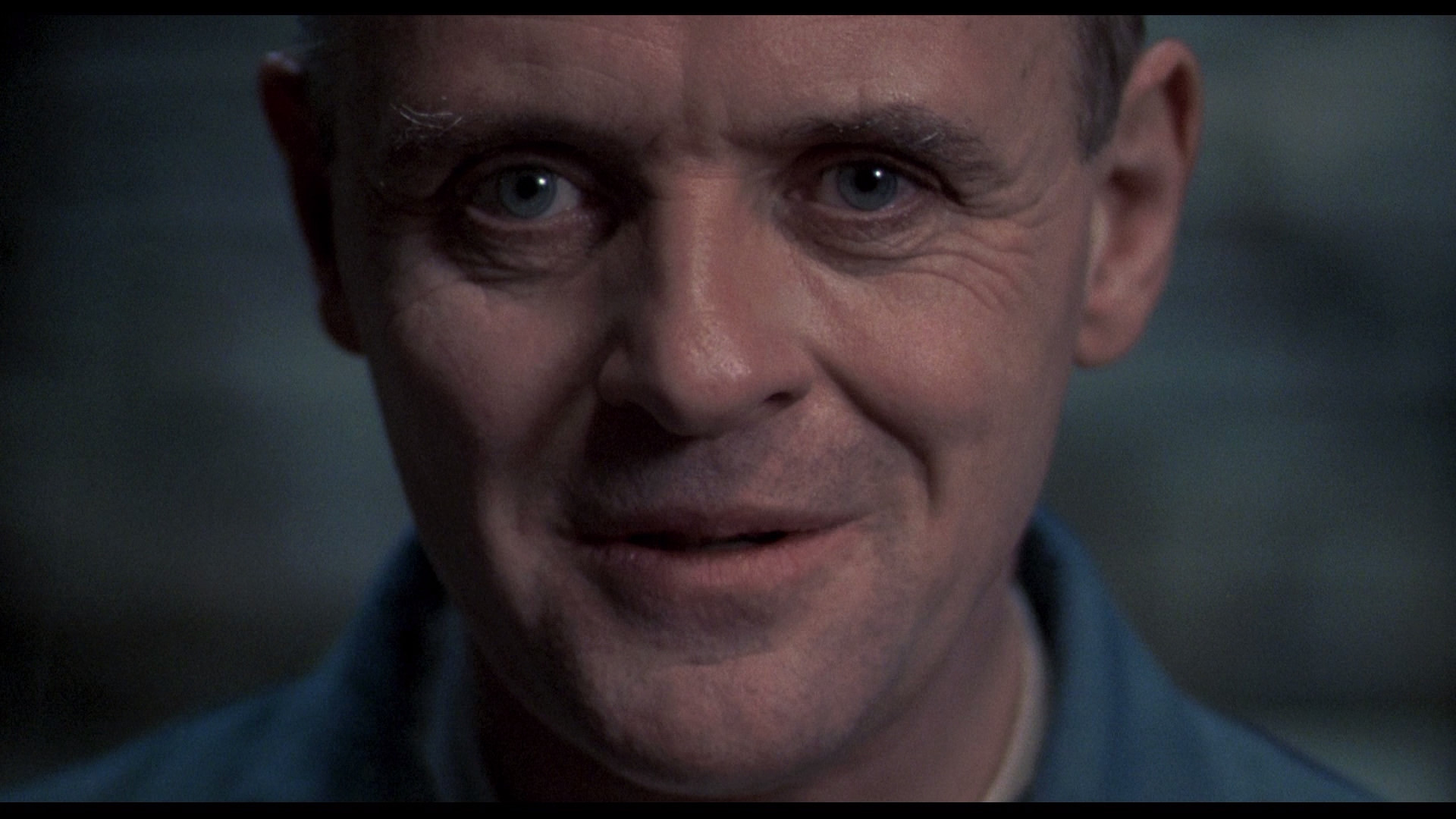


Well, I believe that the key is a high contrast. You see an old man, gallant, extremely intelligent, loving history, art and classical music, but you know that a few minutes ago he has eaten someone’s face. Giving a character contradicting features is a good way to make it interesting and memorable and it is often used in games and movies.

A good example of that can be found in Tim Burton’s ‘Edward Scissorhands’, where the look of eponymous hero strongly opposes his personality. Although Edward resemble something between a demon from ‘Hellriser’ and a member of The Cure with scissors linked to his hands, he has a heart of gold, is shy, helpful and kind to everyone.


The above examples clearly show that it’s not good to judge book by its cover; nonetheless, movie makers and game developers constantly take an advantage of the audience stereotype thinking in order to make them perceive characters in a certain way. It’s especially noticeable among villain characters. When you look at Darth Vader, Lord Voldemort and Sauron you know at once that they are The Bad Guys, even though that the only thing that they have in common are the black outfits. Need a witch? Give her a black cat and broomstick. Archaeologist? Khaki shirt,  hat and whip!


Playing with stereotypes while designing look of a hero is easy and popular trick, although creators have to be careful not to over-use it as they may end up with a boring dummy, looking just like thousands of others. What are the other things that should be avoided? Don’t make you hero too powerful.


Superman is one of the most iconic, marvellous and simultaneously boring superheroes. He is as fast as light, strongest than any other man and he’s resistant to everything but one thing – kryptonite, which as a result drastically reduces the group of people that can stand up to him… and it makes all fights monotonous and predictable. In addition, he wears pants over his trousers – and that also should be avoided when creating a hero.


There are many things that should be kept in mind while designing a character. For instance, high contrast and playing with stereotypes are common methods of developing a hero. On the other hand, following stereotypes could result in copying previously created heroes which might be negatively received by the audience. So that, I believe that new ideas are worth trying as different doesn’t have to mean worst.


Elements of game design - part 2

During my first presentation, which was the review of the game Shadow of the Colossus, I tried to explain what was that ‘special thing’ that made this game one of my favourites. I talked about colossi looks, magical atmosphere and environments... But I felt like I was trying to describe taste of a cake by talking about eggs, flour and sugar flavours… I couldn’t find a word for the thing that made all these elements one extra piece... But I’ve finally found a name for it: art direction.

The person responsible for art direction during a game production is called the art director. His job is to make sure that all elements of the final game are well designed, created and what’s important that they all work together as a whole. It’s really important, tough and demanding job. Art director is a link between artistic team (including concept artists, texture artists and 3d modellers) and the game designer. He has to make sure that all artists accomplish given them tasks on a level required by game designer, but also that they are being provided all materials needed to do that. That is where close work with lead artists is really important, as they help to manage individual art departments.


One could say ‘ok, I see it can be a hard job, but after all it’s still a managing job, there’s no difference between being art director and restaurant manager!’ Well... that’s no true. Although management is a big part of it, that’s obviously not enough. Even though art directors don’t create art pieces themselves they still need to be outstanding artists. Artistic knowledge of lighting, perspective, colour theory etc. is essential for being art director. If that wasn’t enough, they have to know everything about 3d modelling and textures as well!
Even though films and games are two different forms of entertainment I guess that the role of an art director in both is quite similar. They use different mediums but their task is the same: to make sure that everything works well together.


For me art direction is one of the most important aspects when it comes down to rating a game. A good example of game with an interesting art direction is Enslaved: Odyssey to the West. It’s a game set in post-apocalyptic future, so your first thought would be a Fallout-ish atmosphere, moody colours and vast deserts like in Mad Max, right? Well – surprise! Enslaved is one of the most colourful games I’ve ever played! Most of the time in this game I spent in a full daylight, running through abandoned city that slowly turns in to a jungle, full of vibrant plants and flowers. But what is the most important – it works really well with the story.


Being an art director is a hard job and I don’t think I would ever be a right person for it. Beside of lacking some essential skills like good communication skill I don’t enjoy managing other people and don’t feel comfortable when I have to make big, important decisions.

Links:
http://howtonotsuckatgamedesign.com/?p=4176
http://www.gamasutra.com/features/20001204/davies_02.htm
http://www.gamasutra.com/features/20050912/bossant_01.shtml


Elements of game design - part 1

So gameplay – what is it? It’s one of the things that every player knows what it is, but is not sure how to explain it. I think that the reason is that every game has its own gameplay and it differs from one to another game’s gameplay. Even games of the same genre have different gameplays.

For example Baldur’s Gate and The Elders Scrolls: Morrowind are both RPG games set in fantasy universes. However if you look at them they look like a complete different games.The first one is isometric view RPG where you command the group of adventurers. In the second one you’ve got only one hero and you see the world through his eyes.


On the other hand… Are they really that different? In both games you’re on a quest, you fight the monsters, collect experience, obtain new weapons, and cast spells… The difference is how you do it – and that’s what the gameplay is. It’s the way in which player interacts with a game.

As you can see, it’s a very important aspect of every game and it has a great influence on a specific game look and playability. So who is responsible for that? Who, during the game production, makes decisions about gameplay, decisions that can drastically change the whole game? Well, it’s part of the lead designer’s job.

Basically, the lead designer of a game is like a director of the movie. It’s a person with overall vision of a game in his mind, who makes large design decisions to make sure that the final product will match this vision. It’s achieved by coordinating work of other designers: game mechanics designers, level designers and the writers. A game mechanics designer’s job is to make sure that the game is well balanced. For example, the person decides how much damage player will deal with a sword in comparison to damage dealt with a bow. Level designer is responsible for creating the game’s environment and levels. Writers create the story line, narrative, dialogs… They are responsible for making other game elements more coherent.


Beside of directing these people, the lead designer’s job is to presents design outside of the team and keep well-presented documentation of the game. One of the most important documents is Game Design Document. Usually it is created in the pre-production stage of a game development; however it’s constantly changing and improving during the production of a game. Basically, it is a written down core idea and vision of the game, which the developer team should refer to and use as a guide.


Obviously all these designers are only a part of the team involved in a process of game creation. Although some people still believe that games are created by 2-3 computer geeks closed in dad’s garage, that of course is not the case. More and more people are involved in creating games and the entire game industry is evolving with a great speed. I’m really excited to be a witness of that and I can’t wait to see how it’s going to look like in the future.

Links:
http://www.youtube.com/watch?v=qiQcANX3NNE
http://www.gamasutra.com/view/feature/2675/into_the_transmission_randy_.php
http://www.gamasutra.com/view/feature/2156/game_design_theory__practice_.php
 

3/03/2013

Personal gaming history


I was born in 1990, one year after the end of communism  in Poland. So, as you can guess, the entertainment at that time was on a low level and I doubt there was anything that could’ve been called a ‘game industry’. Of course I was too young to care anyway. Fortunately, a few years later the situation in Poland got a bit better and I could enjoy my first video game. It was a cheap Gameboy imitation but it had about a few hundreds built-in games! Well, at least it supposed to… but the fact was that there was about 6-8 different games and multiplicity of their slightly changed variations. Although, it didn’t stop me from having some great fun with it.


Now, the next game is quite significant. In mid 90s economic situation in Poland still wasn’t great and I cannot recall anyone I knew owning original NES. However, if you ask anyone my age from Poland if they know what Pegasus game is I bet they will nod with a smile on their faces. Basically it was quite cheap NES substitute you could get on markets. Most versions came with two controllers, a light gun and 100 in 1 cartridge. But, just like with original NES, you could buy many additional games. Spending many hours playing games like Mario, Contra and Mortal Kombat is one of my most vivid memories of my early childhood.

At the age of 8 I was heavily impressed by one of my mate’s new toy – PC. I asked my parents for one they said I will get it as my first Holy Communion gift. When they enquiried what game I would like to get with it I couldn’t recall the title of one I saw at my friend’s (it was Doom), and I just said ‘one where you can see only a hand with a gun and you shoot monsters’. So I got Half-Life.    


It was the first PC game I’ve ever played and it also became one of my all times favourites. Well, at the age of 8 I was shitting my pants while playing it, but still... it was great! I remember, back then I believed it looked photorealistic. Beside of HL I was playing every game that came on cd with polish gaming magazine: CD-Action. The most memorable were games like Roller Coaster Tycoon, MechWarrior and Heroes of Might and Magic III (I still love it).


A few years later I got PlayStation and I spent many hours playing Tekken 3 and Tony Hawk Pro Skater 2, however I still preferred PC gaming. I kept exploring Half-Life world with the original game extensions: Opposing Force and Blue Shift.

When I was 12 one of my friends asked my ‘hey, you like fantasy books and movies, why don’t you play any RPG games?’ and I was like ‘I don’t like strategic games’. It took him quite a while to persuade me to try and play Baldur’s Gate. But I’ll be in his debt to the end of my life, as it’s become my no.1 favourite game. Although it’s 15 years old, in my opinion, it has two things that many modern games lack: absorbing plot and likeable characters.

It also encouraged me to try out other RPG series like Icewind Dale and Fallout. Even though they both were really good I felt like they were missing something. In the search for that thing I found about traditional, paper-based RPG games like Dungeons & Dragons and Warhammer. For me, as they take place in my imagination, they are beter than any video game.


Obviously it doesn’t mean that I totally neglected virtual gaming. For many nights I was sucked in to the worlds of games like The Elders Scrolls: Morrowind and Fable. As a fan of series I couldn’t stop playing Half-Life 2 when it finally was released. There were many other games but I will mention only two most significant for me.

The first one is Shadow of The Colossus. I don’t remember how I find out about this game, but when I did I purchased PlayStation 2 just for this game only. And I don’t regret a penny. I wish they release sequel/reboot for X-box…

The other game is The Witcher. Not because it’s polish game, but because it’s based on one of my favourites book series – the Witcher Saga. I have to admit that CD Project did great job with visualization of characters and places from the book. The Witcher 2 was even beter and I can’t wait for the next episode.

It would be too boring to talk about ALL games I’ve played so I will finish here. I just hope that some day I will add to the list a game with my name in credits.

New Game Journalism


I guess I am not the most suitable person to write about game journalism because I don’t have much to do with it. I don’t buy games magazines and I very rarely visit games related websites. There are a few reasons for that but most of them come down to fact that – as I wrote in my first entry in this blog – I’m a casual gamer. I do not fancy paying £6-8 for a magazine to read about games that I’ll probably never play.


 Sure, someone could argue that I could read them anyway, because who knows, maybe I’d like some review and I would like to give the game a try? But here comes to play second reason why I don’t read reviews – they tend not to focus on qualities that I value in games. I don’t care too much whether game has brilliant graphics or gives us a wide range of weapons etc… For example – I didn’t choose to play The Witcher 2: Assassins of Kings because most of gaming portals/magazines scored it 9/10 nor because critics prised its combat mechanics, customization and environments… I played it because it was based on one of my favourite books and I wanted to get the feel of the world that I imagined while reading Andrzej Sapkowski’s novel. 


For me the most important questions were: ‘is it a good representation of The Witcher universe?’ and ‘does it capture the mood of the books?’ Unfortunately, but not surprisingly, none of the reviews that I found while working on my presentation project did answered these questions. I encountered the same problem when I was interested in buying Star Wars: The Force unleashed game. As a fan of the movie I was curious how the game relates to the George Lucas saga and does it have the ambience of the galaxy far, far away, however, most of the reviews focused on graphics and on possibility of throwing things at the enemies. And that’s why I think the new game journalism is something really interesting. As I was reading through articles from Guardian’s ‘Ten unmissable examples of New Games Journalism’ I found that non of them focused on the technical aspects of games and instead of saying what you can do they rather said how it feels to do it. My reaction to Ian ‘Always Black’ Shanahan’s article ‘Bow, Nigger’, where he describes the situation that happened to him while playing Jedi Knight: Jedi Outcast was ‘Oh my god! That’s exactly how I remember this game! That was awesome!’ and it did make me want to play this game again! 


And that is what a good review should do in my opinion. It should help you to decide if you want to play the game or not. Because if game gets 3/10 in some magazine it means nothing more but ‘person who reviewed this game didn’t like it’. And who cares? For me it still can be the most amazing game in the world!  In NGJ there’s no scores ranking. It does not say ‘you should/shouldn’t play this game because…’ Instead, it focuses on the experience of playing particular game. I believe it’s great way of writing about games and if gaming magazines would featured that kind of reviews I would pay this £6-8 to buy it.


Links:


1/20/2013

Game review: Shadow of the Colossus


GAME REVIEW:

 SHADOW OF THE COLOSSUS


 When I stood in front of the first colossus my heart started to pound faster. He was a few times my size. Enormous. Slow, but lethal. 

I have to make a confession here – I don’t feel comfortable next to animals bigger than me. Even though my parents own a farm and there are always plenty of horses but I have never got close to them unless I had to. 

So why the hell I was playing a game where the main focus is on defeating giant creatures?! Hell, I literally bought PS2 to play this game! 


Well, I think it was because of the style and atmosphere of the game. It looks like Lord of The Rings had a child with Disney’s Atlantis: The Lost Empire. Marvellous landscapes, epic fights and sensation of ancient culture. 

Shadow of the Colossus takes place in Forbidden Land, a fantasy realm separated from the rest of the world by mountains and sea. Despite of PS2 clumsy graphic I was enchanted with the beauty of that place. I spent a lot of time just wandering around, appreciating breath-taking sights, huge caves and timeworn temples. Also the atmospheric effects like fog and sand storms only magnified the climate.


So what the game is about anyway? It’s about a boy who tries to resurrect a girl, but to do that he has to slay sixteen colossi. I won’t lie- I have no idea what the characters names are or what is the relationship between them. The game gives very little detail on them and the backstory is rather vague. Only plot building elements and interactions between characters occur in short cutscenes separating fights with colossi, although during these clips I was only thinking ‘ok, ok! Give me the next foe!’. 


And it was not only because I wanted to fight it, I was just really curious how it’s going to look like. Developers of this game did a really great job and I’m a big fan of each colossus design.


They vary in shape and size; some of them resemble deadly animals while the others have humanoid forms, still, all of them have some things in common. Their stony faces don’t express any emotions so colossi feel more like objects than the creatures, yet they all emanate with dignity. It’s easy to believe that they are extremely old and that they settled in the Forbidden Land long time ago. Even though my aim was to overcome these ancient beings I almost felt respect for them. 


At first I was a little bit disappointed when I found out that there’re only sixteen opponents in this game. But as it turned out that was enough to keep me busy for many, many hours. The sword and bow that our hero is equipped with seem to only tickle colossi, unless they hit vulnerable spots. And it’s not an easy task to hit these spots. You would be surprised how many swear words it takes to figure out how to reach flying colossus back…

To summarize I will say that Shadow of the Colossus is a wonderful, one of its kind piece of gaming. Although I know that some people may be scared away by imperfect PS2 graphic and obscure story, but for me it’s one of the best game I’ve ever played.    

11/29/2012

A history of computer games part three: 2000s - now

We live in the future. The future that was shown in classic now sci-fi movies, future that was only a strange fantasy to our grandparents. Well, we still don’t have flying cars and personal robots, but we have 3d movies, rover on Mars and computers that can be fitted into a pocket. However, what have changed in the game industry? What are the differences between 80’s, 90’s and now?


The main difference made the influence of the Internet. Apart from big, official news portals, many games have their own fan pages where one can find game related articles and tips. In many cases, they also offer mods – usually fan-made game modifications that introduce changes to already installed game. It can be small addition such as a new weapon, character or big as an entire new world. Game developers make creating mods easier by adding creation tools to original games and it often pays off with game popularity.

Another difference regarding the Internet is playing games itself. MMORPGs, like World of Warcraft, engage millions of players spending many hours in virtual worlds every day. People love to play with their friends, so no wonder that social portals like Facebook and MySpace offer their own games. Most of them are free to play, although, they tempt players to buy additional points or items. The most popular of them is FarmVille, which has over 70 million active users worldwide.


The first console that allowed players to play on-line was Dreamcast. Released in 1998 by SEGA, it was the first entry into the sixth generation of video game consoles. It was followed by Sony PlayStation2, which enabled not only playing new games but also old PS1 games and DVDs. One year later Nintendo released GameCube – their first disc-based console. In spite of generally positive comments it was criticised for its silly design and lacking the mature games.

In 2001, Microsoft entered the console market with the Xbox – device that used much PC technology. Microsoft sold Xbox console with quite a loss and at the same time scooping money from games. The most significant one, which decided about Xbox success, was Bungie Studio's Halo: Combat Evolved. It was the first of the series that became one of the most successful console shooters of all time. Another influential game released in 2001 was GTA III. It contributed to popularization of open world games where players could decide where they want to go. Also, mobile games become more and more popular since early 2000s.


The seventh generation started in 2004 with Nintendo DS and PlayStation Portable handheld consoles. In 2005, Microsoft released Xbox 360 followed by Sony’s PlayStation 3 a year later. Both were characterized by great graphic, large hard disc-based secondary storage and Internet connection. Still, PlayStation was more expensive as it came with Wi-Fi and Blu-ray disc. Nintendo decided to go in different direction and released Wii – motion controlled console with lower-definition graphic. Although Wii was underestimated by hard-core gamers, it became the fastest selling console in most of the world's gaming markets.


It’s hard to guess how game industry is going to look in the next 10-20 years, but we can be sure that it’s going to be exciting.